Roofing built around Dunwoody Village's colonial character
The streets around Dunwoody Village filled in during the 1970s, when colonial and traditional designs ruled this corner of DeKalb County and cedar shake was still a standard roof. Those shake roofs are long gone, converted over the decades to architectural shingle, but the houses under them still carry the framing habits of their era. We treat that history as useful information, not trivia. We are Best Dunwoody Roofer, a local roofing company that does its own work across Dunwoody and North DeKalb, and the Village's colonials are exactly the kind of house we are built to handle. You get a free inspection, photos of what we find, and an itemized written estimate before anyone touches a shingle.
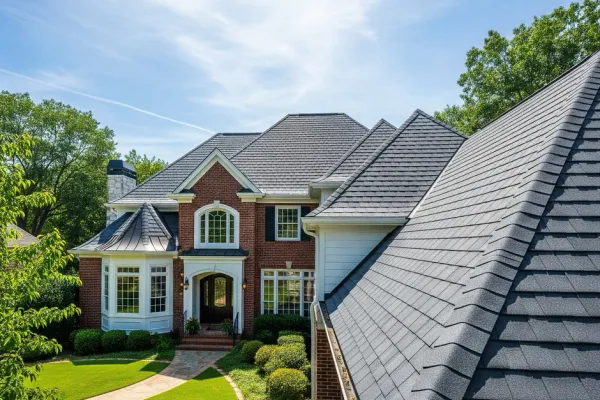
A roofing crew that fits the Village streetscape
Dunwoody Village is the closest thing Dunwoody has to a town center, a Williamsburg-style retail district ringed by the colonial and traditional homes that built the city's reputation. The old Dunwoody Farmhouse still stands nearby as a reminder of how long people have been keeping roofs dry on this ground. Working here calls for some restraint. A roof should suit the house, the street, and the oak canopy shading both.
We install GAF and CertainTeed shingle systems on Dunwoody Village roofs, and every finished roof carries the manufacturer's material warranties plus our own written workmanship warranty. Habits matter as much as materials, though. Clean tear-offs, honest decking calls, and a magnetic nail sweep at the end are what Village neighbors actually notice.
Materials matched to 1970s colonials
Architectural shingle lines from GAF and CertainTeed suit the Village's traditional facades far better than builder-grade three-tab, and they stand up to Georgia heat, hail, and wind. We help you land on a profile and color that looks right on a colonial roofline.
Free inspections, plain-English findings
Every Dunwoody Village inspection covers shingles, flashing, decking, ventilation, and gutters, all documented with photos. You get an itemized written estimate and a straight recommendation, repair or replace, with no pressure attached either way.
Colonial rooflines from the 1970s age in predictable ways
A 1970s colonial near Dunwoody Village is usually an honest roof to work on. The gables are simple, the pitches are moderate, and the failure points repeat from house to house. Chimney flashing installed fifty years ago has often been tarred over two or three times instead of replaced. Pipe boots crack on schedule. Original decking boards can hold fastener bites just fine on one slope and crumble on the next, which is why we price decking by what we actually find at tear-off rather than folding a guess into every quote. Ridge lines on these homes frequently predate modern ridge vents entirely. When we replace a roof in Dunwoody Village we bring the whole assembly up to current code, synthetic underlayment, ice and water shield in the valleys, new drip edge, balanced ventilation, and shingles rated for the wind this part of Dunwoody sees every summer.
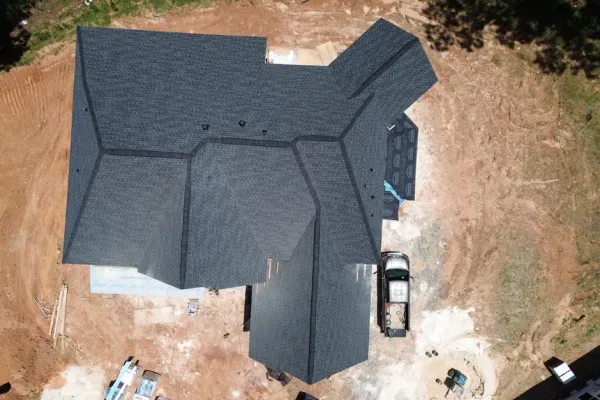
The Village's cedar-shake past still lives under some roofs
Plenty of homes around Dunwoody Village started life under cedar shake and were converted to asphalt shingle decades ago. Some of those conversions were done thoroughly, with new solid decking over the old framing. Others took shortcuts, and a shingle field laid over irregular or skip-sheathed decking telegraphs every gap through the surface as the roof ages. Part of our inspection routine on older Village homes is figuring out which kind of conversion happened before we talk about anything else. Where the decking is sound we say so. Where it needs sheathing added or replaced, we show you photos and price the work by the sheet, in writing. That one step is the difference between a replacement that stays flat and quiet for thirty years and one that ripples within five.
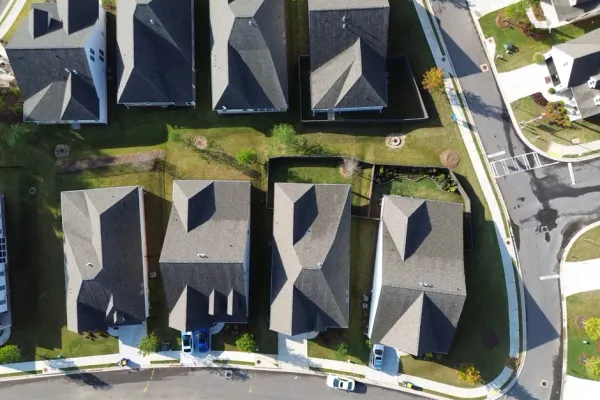
Mature oaks set the maintenance calendar in Dunwoody Village
The oak canopy is a big part of why people love Dunwoody Village, and it is also the main thing working against its roofs. Shaded slopes hold moisture after every rain, feeding the algae streaks that show up on north faces first. Leaf drop loads valleys and gutters from October straight through December, and a clogged valley is one of the most common leak sources we trace in this neighborhood. Acorns and small limbs bruise shingles and knock granules loose; a falling limb of any size can crack decking outright. None of this means the trees have to go. It means a Dunwoody Village roof earns an annual once-over, clear gutters going into storm season, and shingle lines with algae resistance built in, so the canopy stays an asset instead of a slow-motion problem.
Storm help arrives by way of Chamblee-Dunwoody Road
Summer storms in this part of DeKalb County are short, violent, and specific. One street near the Village catches hail while the next stays dry, and wind uplift finds the one ridge cap that was ready to let go. Because the Chamblee-Dunwoody and Mount Vernon corridors meet right at Dunwoody Village, our storm crews can reach most of the surrounding streets within minutes of clearing weather. The first visit is about stopping water, tarping breaches, photographing every slope, and documenting hail strikes and creased shingles while the evidence is fresh. That record matters later, when your insurance adjuster needs proof of what the storm did versus what age did. We stabilize first, then walk you through the repair conversation without drama.
Ventilation upgrades built for pre-energy-code attics
Homes built around Dunwoody Village in the 1970s went up before Georgia's energy codes tightened, and their attics show it. Many still rely on a pair of gable vents to move air through a large attic, which leaves summer heat trapped against the underside of the decking, baking shingles from below and shortening their life by years. Cooking heat also drives up cooling bills in every room under the roof. When we replace a Village roof we treat ventilation as part of the system, not an add-on. Continuous ridge vent paired with clear soffit intake moves air the way the assembly was meant to work, and we verify the soffits are actually open rather than painted or insulated shut. It is unglamorous work that quietly adds years to the new shingles above it.
Dunwoody Village is where Dunwoody feels most like a town. The Williamsburg-style retail district gives the area its white-brick, colonial-revival face, the old Dunwoody Farmhouse anchors its history, and the neighborhoods radiating out from the Chamblee-Dunwoody and Mount Vernon crossroads hold some of the city’s most consistent 1970s housing stock. Colonials and traditionals dominate, most of them built when cedar shake was the default roof and DeKalb County inspectors worked from a much thinner code book. Nearly every one of those roofs has since been converted to architectural shingle. That shared history is exactly why roofing around Dunwoody Village rewards a crew that has seen a few hundred of these houses rather than a few.
The Village’s colonials were framed for a different roofing era
A house built near Dunwoody Village in 1974 was framed for shake: lighter roof loads, ventilation as an afterthought, flashing details that have now been patched by three generations of handymen. Modern architectural shingle is heavier, tighter, and far better, but only when the assembly underneath is brought along with it. That is the real work of a Village replacement. Decking gets evaluated sheet by sheet. Chimney and step flashing get replaced, not re-tarred. Valleys get ice and water shield, edges get new drip metal, and the attic finally gets the intake and ridge ventilation the original builder skipped. The shingles are the visible part. The other ninety percent is why one roof lasts thirty years and another fails in twelve.
A storm claim should read like evidence, not a guess
Hail and straight-line wind do not spread themselves evenly across Dunwoody, and insurers know it. When a cell tracks over the Village, the difference between a paid claim and a denied one is usually documentation. Our crew photographs every slope, marks hail strikes, and separates storm damage from ordinary wear in writing, because the adjuster will make exactly that distinction. We meet adjusters on the roof, walk them through the evidence, and handle storm damage repair from emergency tarp to final shingle under one accountable scope. Homeowners who call within days of a storm consistently have an easier claims experience than those who wait a season. If a storm has crossed Dunwoody Village recently, get the roof looked at while the proof is still on it.
One accountable crew for every layer of the roof
Roof work around Dunwoody Village rarely stays in one lane, and we quote it honestly across all of them. A full roof replacement makes sense when shingles are past saving; a targeted repair is the right call when a flashing joint or a wind-lifted section is the only real problem. An annual roof inspection catches canopy damage early, and gutter repair keeps oak litter from turning into fascia rot. If you are budgeting ahead, you can price out a replacement before you call anyone using the roof cost calculator, or simply book a free inspection online and let the photos drive the conversation.
Coverage that starts at the Farmhouse and runs past the Perimeter
Dunwoody Village sits in the middle of our home turf, so the same crew covers the streets around the retail district, the traditionals along Mount Vernon, and the rest of Dunwoody out to the I-285 edge. Neighbors in the Georgetown district and the communities around Perimeter Center get the same treatment, and the broader DeKalb County area is an easy reach. One phone call, (470) 777-7344, puts a Dunwoody Village roof on the schedule this week.
How do you approach roofs on Dunwoody Village's 1970s colonials?
We start from the era. A 1970s colonial near Dunwoody Village usually has simple gables, aging chimney flashing, and decking that varies slope to slope, so the inspection focuses there first. Replacement quotes spell out shingle line, underlayment, ice and water shield, drip edge, ventilation, and a per-sheet price for any decking we have to replace. Nothing gets averaged in or hidden. We do the work ourselves, and the estimate is free and itemized.
Is there really cedar shake history under homes near the Village?
Yes, and it still matters. Many houses surrounding Dunwoody Village were built with cedar shake and converted to asphalt shingle years later. Conversions done with new solid sheathing perform like any modern roof. Conversions that skipped that step leave gaps under the shingle field, and those roofs ripple and wear unevenly as they age. During an inspection we identify which version you own, show you the evidence, and only recommend decking work where it is genuinely needed.
What does the oak canopy do to a Dunwoody Village roof?
Three things, mostly. Shade keeps north-facing slopes damp and feeds algae streaking. Leaf and acorn drop clogs valleys and gutters every fall, which is a leading cause of the leaks we trace here. And limbs, from twigs to whole branches, bruise shingles and occasionally crack decking during storms. The fixes are practical: algae-resistant shingles, clear gutters going into storm season, and a yearly inspection so small canopy damage gets caught while it is still a minor repair.
How fast can you get to Dunwoody Village after a storm?
Quickly, because geography helps. Dunwoody Village sits where Chamblee-Dunwoody Road meets the Mount Vernon corridor, and we run 24/7 storm response across Dunwoody. After a hail or wind event we prioritize active leaks first, tarping breaches and photographing damage on every slope while it is fresh. That documentation goes straight into your insurance file. Call (470) 777-7344 and you will talk to someone who can actually dispatch a truck, not a call center.
What will a roof replacement near Dunwoody Village cost?
It depends on square footage, pitch, material choice, and how much decking needs attention once the old shingles come off, which is why we put every number in writing before work starts. The free inspection produces an itemized estimate you can compare line by line against any other bid. If you want a ballpark before anyone visits, the roof cost calculator on this site produces a fair range for Dunwoody homes in about two minutes. Financing options are available on larger projects.
Get Village-ready numbers before you commit
Whether your Dunwoody Village colonial needs a small flashing repair or a full tear-off, the process starts the same way: a free inspection, photos, and an itemized written estimate from our own crew. Run your own numbers first if you prefer.
Not sure what a new roof runs? Estimate your roof cost in Dunwoody, measured from satellite imagery, or run a storm & insurance damage check.