Roofers who know Georgetown's ranches, split-levels, and townhomes
Georgetown is Dunwoody's front porch on the Perimeter, the district where Chamblee-Dunwoody Road meets I-285 and where the city's housing story runs in two chapters. The first chapter is 1960s and 70s ranches and split-levels, sturdy houses with roofs now on their second or third generation of shingle. The second is the newer townhome development around the Project Renaissance and Georgetown Park area, tighter construction with its own roofing logic. We are Best Dunwoody Roofer, a local roofing company, and we work both chapters every week, from era-literate inspections on the older streets to precise scopes on the newer blocks. Free inspections, photographed findings, itemized written estimates, every time.

Straight answers for Georgetown homeowners
A Georgetown address puts you closer to I-285 than almost anywhere else in Dunwoody, which is great for commutes and demanding on roofs. Wind moves hard across the open interchange corridors, summer storms arrive with little warning, and the neighborhood's mix of fifty-year-old ranches and recent townhomes means no single roofing formula fits every street.
That mix is why we quote Georgetown roofs from the ladder, not the desk. We install GAF and CertainTeed shingle systems and back every installation with our own written workmanship warranty on top of the manufacturer's material coverage. What Georgetown homeowners tend to remember, though, is simpler: our crew showed up when promised and the final invoice matched the estimate.
Split-level and ranch roof fluency
Georgetown's split-levels stack rooflines against siding in ways that punish sloppy step flashing. Our crews rebuild those transitions correctly, kick-out flashing included, so water exits into the gutter instead of behind the cladding.
Townhome-scale coordination
On attached homes near Georgetown Park, we sequence tear-off, protect shared driveways and landscaping, and keep neighbors informed. Tight sites reward planning, and we bring it without being asked.
Split-level roofs hide their trouble in the transitions
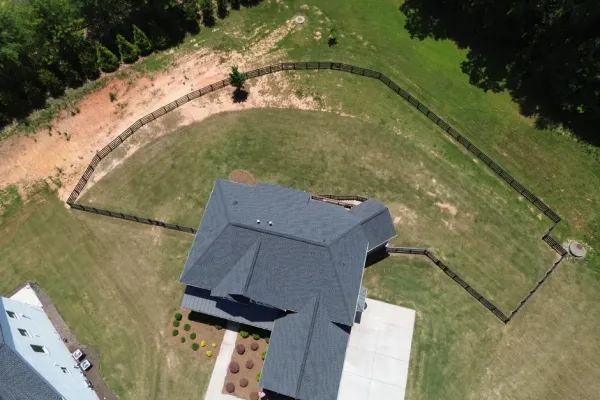
The classic Georgetown split-level puts a low roof plane against a two-story wall, and that joint is where most of its leaks are born. Step flashing that was woven correctly in 1972 has often been buried under two re-roofs since, with each crew slathering sealant where metal should have been replaced. Water follows the wall down behind the siding, shows up as a stain two rooms away, and gets blamed on a window. We have chased enough of these to check the transitions first on any Georgetown split-level. Done right, the fix is mechanical rather than cosmetic: new step flashing at every course, a kick-out at the bottom to throw water into the gutter, and counterflashing cut into masonry where the roof meets brick. It is detail work, and it is the difference between a dry family room and a recurring mystery.
Townhomes near Georgetown Park run on tighter tolerances
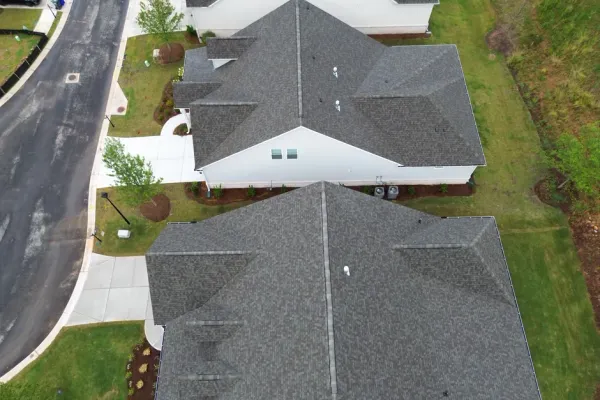
Over in the Project Renaissance and Georgetown Park area, the newer townhome streets were built to modern code, which is good news, but attached construction concentrates risk in ways detached houses avoid. Roof planes are shared or nearly shared, so a failure on one unit can wet the neighbor's ceiling. Staging is tight, landscaping sits close to the drip line, and parking is precious. When we work these buildings we plan the job like a small logistics exercise: materials arrive the morning of tear-off rather than days early, tarps and plywood protect everything under the eaves, and the magnetic nail sweep covers shared drives and sidewalks, not just the yard in front of one unit. Owners and associations get the same documentation either way, photos before and after, and a written scope that maps exactly which planes were touched.
Life beside I-285 leaves a mark on a roof
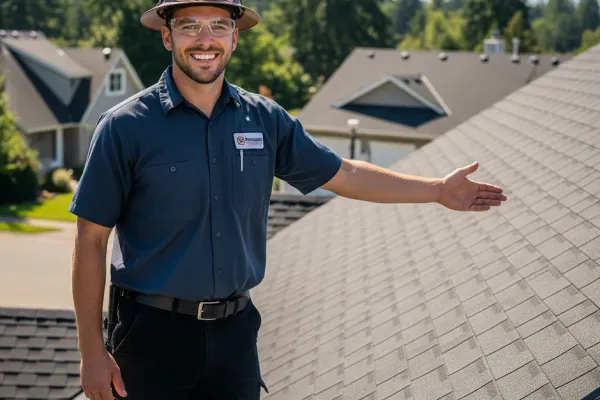
Georgetown sits right against the Perimeter, and the highway shapes its weather more than most residents realize. Wind accelerates across the open interchange corridors, so gusts that read as moderate elsewhere in Dunwoody arrive here with extra push, testing ridge caps, rake edges, and any shingle tab whose sealant strip has aged past its best years. Fine road grime settles on roof surfaces and washes into gutters, adding to the load that leaves and seed pods already deliver. None of this dooms a Georgetown roof. It argues for specific choices: shingles rated for higher wind speeds, six-nail fastening at the edges and ridges where uplift concentrates, and a gutter system sized and pitched to move real Georgia rain. We build those defaults into every quote in this part of Dunwoody.
Sixty-year-old decking tells the truth during tear-off
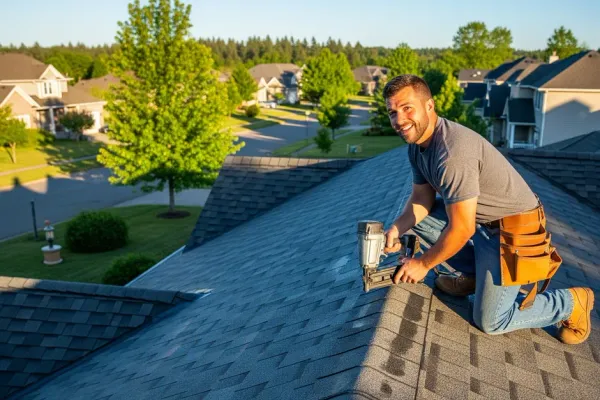
Under the shingles, many of Georgetown's 1960s ranches still carry their original plank decking, and it is often in better shape than anyone expects. Old-growth boards hold nails well when they have stayed dry. The problems are local: a soft patch under a long-ignored leak, gaps between boards that have shrunk over six decades, corners where a previous crew nailed into air. Tear-off is the only honest audit these roofs ever get, so we treat it that way. Every slope gets walked after stripping, soft spots get probed and photographed, and replacement sheathing gets priced per sheet at the rate quoted before the job started. Homeowners see the pictures before we close anything up. A new roof over bad decking is a bad roof with good marketing, and Georgetown deserves better than that.
Gutters and fascia carry Georgetown's runoff, until they can't
Every ranch and split-level in Georgetown depends on a few hundred feet of gutter to move serious volumes of water away from brick, siding, and slab. When those runs clog or pull loose, the damage rarely announces itself on the roof. It shows up as stained fascia, soft soffit board, tiger-striped siding, and in the worst cases a damp line along the foundation. Dunwoody's canopy keeps a steady supply of leaves and twigs headed for every downspout, and older spike-and-ferrule gutters gradually lever themselves away from the fascia with each freeze-thaw cycle. We repair and rehang what can be saved, replace what cannot, and correct the pitch so water actually reaches the downspouts. Where fascia has gone soft behind a failed gutter, we replace the board rather than screwing new hardware into rot.
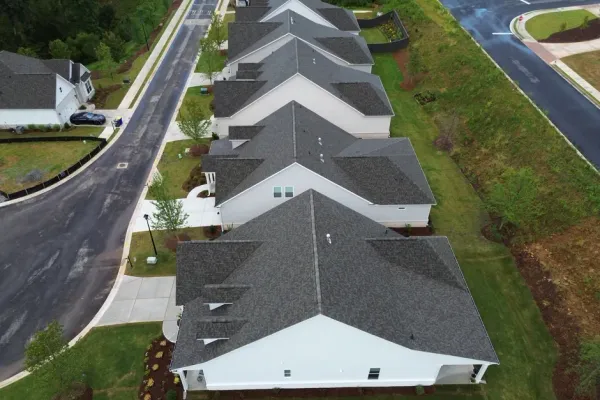
Georgetown grew up where Dunwoody meets the Perimeter, along the stretch where Chamblee-Dunwoody Road crosses I-285 and the city begins. Its first houses were the ranches and split-levels of the 1960s and 70s, built in brick and hardwood on generous lots, and many are still owned by families who have re-roofed them once already and are starting to think about the next round. The newer chapter arrived with the townhome development around the Project Renaissance and Georgetown Park area, which added modern attached housing to a district that had been all detached for decades. For a roofing crew, Georgetown is really two jobs wearing one neighborhood’s name, and treating them identically is how mistakes get made.
Georgetown grew in two waves, and its roofs show both
The 1960s ranch and the 2010s townhome fail in completely different ways. The ranch’s risks are age-driven: brittle pipe boots, flashing on its third layer of sealant, plank decking with a soft spot nobody has seen since the Nixon administration. The townhome’s risks are density-driven: shared planes, tight staging, and builder-grade shingle that ages faster than the mortgage. We keep both playbooks current. On older Georgetown streets that means era-literate inspections and honest tear-off pricing. On the newer blocks it means precise scopes, clean logistics, and materials a cut above what the original builder specified. Either way the standard is the same: a roof that outlasts the paperwork.
Hail claims reward homeowners who document early
When hail or wind crosses the Perimeter and lands on Georgetown, the clock starts. Insurers pay on evidence, and evidence fades as weather scrubs the roof and normal wear blurs the picture. Our storm process is built around that reality. The crew photographs every slope, circles strikes, and writes up what is storm damage versus what is age, because your adjuster will draw exactly that line. We handle storm damage repair end to end, from emergency tarp through final ridge cap, and we meet adjusters on the roof to walk the proof. A quick call to (470) 777-7344 within days of a storm has saved more than one Georgetown claim that a slow response would have sunk.
Repairs, replacements, and everything between
Not every Georgetown roof problem is a replacement, and we say so plainly. A ceiling stain often traces to one failed boot or flashing joint, which is a roof leak repair measured in hours, not days. Undersized or sagging gutters on a ranch are a gutter installation conversation. When shingles are genuinely done, a full roof replacement with proper decking work and ventilation resets the clock for decades. If you want numbers before talking to anyone, the roof cost calculator gives Georgetown homeowners a realistic range in about two minutes, and you can schedule a free inspection whenever you are ready for exact figures.
Quick perimeter access cuts both ways, and we use it
The same interchange that carries Georgetown commuters out each morning carries our trucks in. From the Chamblee-Dunwoody exit our crew reaches most Georgetown streets faster than almost anywhere else we serve, which matters most in storm season when tarps beat forecasts. The rest of Dunwoody is minutes away, from the colonial streets around Dunwoody Village to the bungalow blocks of Brookhaven just down the road in DeKalb County. Georgetown is not an outpost of our service area. It is the front door.
Do Georgetown's split-levels cost more to re-roof than its ranches?
Sometimes, and the driver is complexity rather than size. A split-level adds roof-to-wall transitions, extra step flashing, and often a second staging setup, all of which take crew time a simple gable ranch does not. A ranch with a long, low, walkable roof is about as efficient as residential roofing gets. On a Georgetown street the two can sit side by side and quote differently by a meaningful margin. The itemized estimate shows exactly where the difference lives, so you are never guessing at the math.
Can you replace a townhome roof near Georgetown Park without disrupting the whole row?
Yes. Attached construction just requires the job to be planned like the tight site it is. We confirm scope boundaries in writing, deliver materials the morning work begins, protect shared drives and plantings, and finish the magnetic nail sweep across every surface the crew touched. Where an association is involved we provide the documentation it needs before and after. Most single-unit townhome roofs near Georgetown are torn off and dried in the same day, weather permitting.
What should owners of Georgetown's 1960s ranches expect at tear-off?
Expect honesty about decking. Original plank decking usually survives sixty years well, but isolated soft spots under old leaks are common, and gaps between shrunken boards sometimes need attention before new shingles go down. We quote a per-sheet decking price up front, photograph anything we find, and show you the evidence before covering it. The rest of the assembly gets modernized as a matter of course: synthetic underlayment, ice and water shield in valleys, new drip edge, and ventilation that most 1960s builders never installed.
Does living next to I-285 actually affect my Georgetown roof?
It does, modestly but measurably. The open corridors around the interchange let wind arrive with more speed than interior Dunwoody streets see, which stresses ridge caps, rake edges, and aging sealant strips first. Road film also adds to gutter load. The practical response is straightforward: higher wind-rated shingles, six-nail fastening at the perimeter zones, secure ridge cap installation, and gutters kept clear enough to handle storm volume. Those choices cost little at install time and spare Georgetown homeowners the most common wind repairs later.
Who actually does the roofing work in Georgetown?
We do. Best Dunwoody Roofer is a local roofing company, and our own crews handle Georgetown roofs from tear-off to final ridge cap. We install GAF and CertainTeed shingle systems, document every job with photos, and back the work with a written workmanship warranty on top of the manufacturer's material coverage. You deal with the same company from the first inspection through the last nail sweep, and the final invoice matches the written estimate.
Put a proven crew on your Georgetown roof
Ranch, split-level, or townhome, the first step is identical: a free inspection with photos and an itemized written estimate. No pressure, no surprise line items, and a crew that treats quick perimeter access as a service commitment rather than a slogan.
Not sure what a new roof runs? Estimate your roof cost in Dunwoody, measured from satellite imagery, or run a storm & insurance damage check.