Roofing where Dunwoody works, shops, and comes home
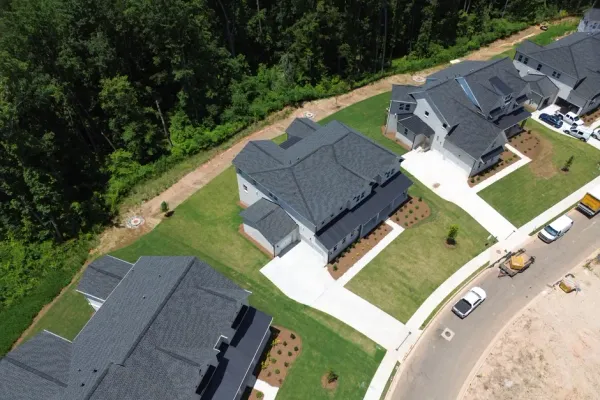
Perimeter Center reads as pure commerce from the highway, all office towers and the sprawl of Perimeter Mall, but thousands of people live behind that skyline in condo and townhome communities threaded along the Hammond Drive and Ashford-Dunwoody corridors. Their roofs are a genuine mix: steep shingle on the townhomes, low-slope and flat sections on some of the multifamily buildings, and everything aging under the same DeKalb County sun. We are Best Dunwoody Roofer, a local roofing company, and we handle both pitched and low-slope work ourselves. Inspections are free, findings come with photos, and estimates arrive itemized.
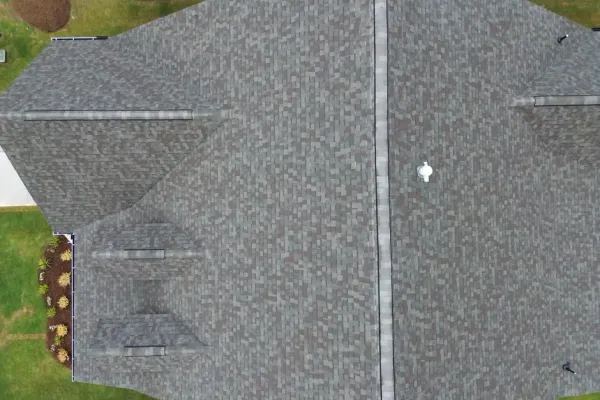
Residential focus in Dunwoody's busiest square mile
Roofing at Perimeter Center means working around real life at density: commuter traffic on Ashford-Dunwoody Road, shoppers streaming toward Perimeter Mall, residents who share walls, driveways, and sometimes roof planes with their neighbors. Crews that only know quiet cul-de-sacs struggle here. Ours does not, because staging, scheduling, and communication get planned before the first shingle moves.
The technical mix matters just as much. A townhome's architectural shingle field and a multifamily building's flat section fail in different ways on different clocks, and Perimeter Center has both, sometimes on the same structure. We install GAF and CertainTeed shingle systems and bring flat-roof repair experience besides, so one accountable crew can own the whole assembly instead of splitting it across two contractors who blame each other at the first leak.
Pitched and low-slope, one scope
Shingle fields, membrane sections, and the flashing where they meet all land in a single written scope. No finger-pointing between trades when a transition leaks, because the same crew owns both sides of it.
Clean staging on busy streets
Deliveries timed to the workday, dumpsters placed where they block nothing, protection over entries and parking, and a magnetic nail sweep across every shared surface. Density is a planning problem, and we plan for it.
Condo and townhome roofs live in Perimeter Mall's orbit
The residential pockets around Perimeter Center were built to put people close to jobs and shopping, and their roofs reflect the trade-offs of that convenience. Townhome rows carry long, connected shingle planes where one aging section can shorten the life of the run beside it. Condo buildings mix pitched perimeters with flat interior sections that residents never see and rarely think about. Landscaping sits tight against structures, parking is metered in feet, and any crew working here shares the street with mall traffic. We treat those constraints as part of the job description. Scopes are mapped plane by plane so owners and associations know exactly what is being replaced, schedules respect commuter hours, and the site gets returned each evening in a state a property manager can walk without flinching.
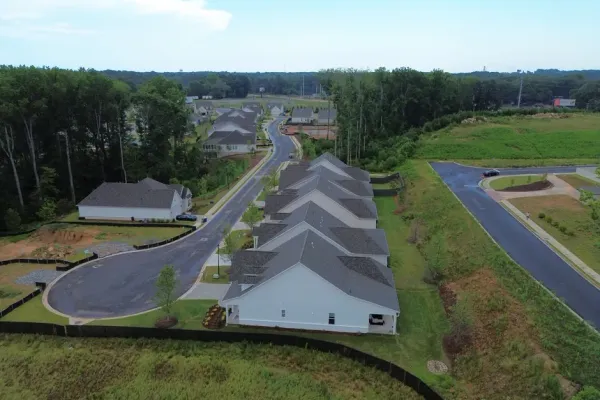
Low-slope sections fail differently than shingle fields
Some multifamily buildings around Perimeter Center carry flat or low-slope sections, and those roofs play by their own rules. Water does not run off them so much as negotiate with them, which makes ponding the enemy and drainage the whole game. Seams and penetrations, vents, drains, HVAC curbs, are where membranes give up first, usually as a slow seep rather than a dramatic leak, and by the time a stain reaches a ceiling the water has often traveled far from its entry point. Our low-slope work centers on the failure points: reseating and sealing seams, rebuilding flashing at curbs and walls, clearing and correcting drainage paths, and documenting membrane condition with photos so a board can plan replacement on evidence instead of guesswork. Flat sections hide their problems well. We go find them.
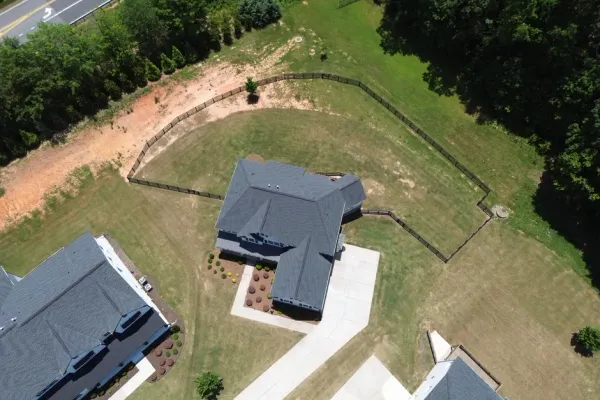
Wind behaves differently around towers
Perimeter Center's high-rise offices do something to storms that the rest of Dunwoody never experiences: they channel and accelerate wind at street level and rooftop alike. Gusts split around towers, speed up through the gaps, and arrive at nearby townhome ridges with more force than the forecast suggested. The first casualties are always the same, ridge caps, rake-edge shingles, and any tab whose adhesive strip has baked past its prime. Wind uplift concentrates along edges and ridges, so on exposed elevations we compensate at install time with six-nail fastening, hand-sealed perimeter courses where conditions warrant, and ridge caps rated for the gust loads this district actually sees. After a storm, we check the wind-facing planes first. It is a small piece of local knowledge, but it finds damage that a generic inspection checklist walks right past.
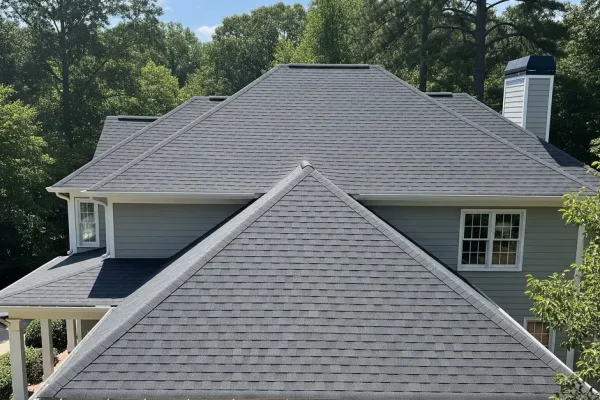
Boards and managers get paperwork they can act on
A lot of roofing around Perimeter Center is decided by committees, and committees run on documentation. When we inspect a condo or townhome community we produce reports built for that audience: photographs keyed to a roof plan, plain-language condition notes for each plane, a repair-now list separated from a budget-later list, and itemized pricing that survives a line-by-line reading at a board meeting. Associations use these documents to plan reserves, compare bids honestly, and show owners why an assessment is or is not needed. Individual owners get the same rigor scaled down. Nobody at Perimeter Center should approve five figures of roofing on a verbal say-so, and no crew we send will ever ask them to.
Ponding water needs a trained eye before it needs a bucket
Standing water is the quiet destroyer of low-slope roofing, and Georgia's storm pattern produces plenty of chances for it around Perimeter Center. A summer downpour drops an inch in an hour, gutters and drains sized decades ago struggle to keep pace, and any low spot in the membrane holds a pond long after the sky clears. Water that lingers accelerates membrane aging, finds pinholes that a draining roof would never notice, and adds structural load nobody budgeted for. The warning signs are visible if someone looks: rings of sediment marking recurring ponds, vegetation sprouting at drain edges, staining below scuppers. We look. Drainage assessment is a standard part of every low-slope inspection we run in this district, and correcting a slope or clearing a drain today is dramatically cheaper than replacing wet insulation next year.
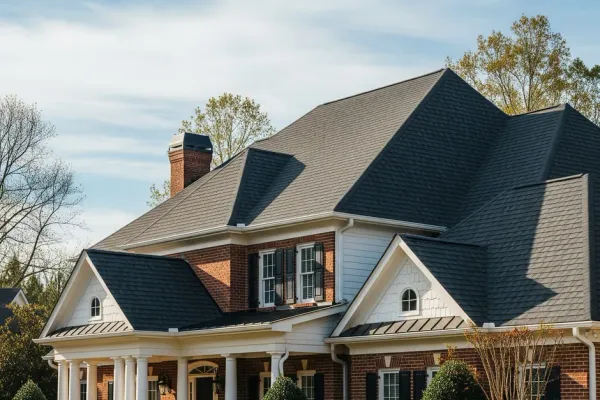
Perimeter Center is Dunwoody’s skyline district, the commercial engine where high-rise offices and Perimeter Mall pull in workers and shoppers from across the metro every day. Look past the towers, though, and the district is also a neighborhood. Condo and townhome communities line the side streets off Hammond Drive and Ashford-Dunwoody Road, housing people who wanted to live minutes from everything, and every one of those homes has a roof quietly doing its job above the commerce. The housing here skews newer than Dunwoody’s colonial core, built in waves as the district densified, with steep architectural-shingle townhomes standing near multifamily buildings that carry low-slope and flat sections. Two kinds of roofing, one zip-code-sized weather pattern, and a single standard for doing the work right.
Glass towers above, wood-framed roofs below
The defining fact of Perimeter Center roofing is contrast. Office towers of glass and steel shape the wind, cast the shade, and set the district’s pace, while the actual residential roofs are wood-framed assemblies of shingle, underlayment, flashing, and decking, the same materials protecting a ranch in any quiet corner of DeKalb County. Those roofs just live in a harder environment: accelerated gusts between buildings, reflected heat off acres of glass and pavement, and maintenance decisions routed through associations rather than a single homeowner at a kitchen table. We built our Perimeter Center service around that contrast. The craft stays traditional. The logistics, documentation, and wind detailing get engineered for the district as it actually is.
Hail does not check zoning before it lands
When a hail cell tracks across Dunwoody it hits the towers, the mall, and the townhomes with equal indifference, and the residential roofs keep the dents. What happens next decides whether insurance treats the damage fairly. Our storm protocol is evidence-first: every plane photographed, strikes marked, storm damage separated in writing from ordinary aging, because adjusters draw precisely that line. We provide emergency roof repair when a breach is active, tarping first and arguing paperwork later, and we meet adjusters on the roof with the documentation laid out. Perimeter Center residents who call (470) 777-7344 within days of a storm consistently see smoother claims than those who discover damage during a sale inspection two years on.
Matched services for mixed construction
Because this district mixes construction types, the service list has to cover real range. A thorough roof inspection is the honest starting point for any owner or board that inherited a roof of unknown history. Townhomes with tired shingle fields get straightforward roof replacement quotes with full tear-off, decking priced per sheet, new drip edge, ice and water shield in the valleys, and ventilation corrected as part of the scope. Buildings weighing a longer horizon can price metal roofing against asphalt with actual lifecycle numbers. If you just want a figure to bring to a meeting, the instant roof estimate takes about two minutes, and you can book a free inspection when you want the range narrowed to a quote.
Based at the Perimeter, serving every corner of Dunwoody
Perimeter Center sits at the center of gravity of our service area, so response here is as fast as it gets, down Hammond Drive or Ashford-Dunwoody within minutes of a call. The same crew covers the rest of the city, from the colonial streets around Dunwoody Village to the brick ranches of Tucker on the east side of DeKalb County. High-rise district or quiet street, the deliverable never changes: a documented roof, an itemized invoice that matches the estimate, and a crew you would let back on the property without thinking twice.
Do you actually work on the flat sections of multifamily buildings near Perimeter Center?
Yes. Flat and low-slope repair is part of the service list, and around Perimeter Center it comes up constantly because so many multifamily buildings carry membrane sections alongside their pitched perimeters. The work centers on seams, penetrations, flashing at curbs and walls, and drainage correction, the places these roofs actually fail. Where a membrane is near the end of its life we document its condition with photos and give the owner or board honest replacement math instead of stretching repairs past the point of sense.
How does wind around the Perimeter Center towers affect ordinary shingle roofs?
The towers channel and accelerate gusts, so nearby townhome and condo roofs see stronger wind at the ridge than the regional forecast implies. That shows up as lifted ridge caps, creased tabs along rake edges, and adhesive strips breaking their bond years early on exposed planes. The countermeasures are installation details: six nails per shingle in the perimeter zones, hand-sealing where exposure justifies it, and properly fastened ridge caps. After any named wind event, the wind-facing elevations deserve a look even if nothing is visibly missing.
Can you work directly with a condo association at Perimeter Center?
That is normal for us. We inspect the full roof system, deliver a photo-keyed report with per-plane condition notes, split urgent repairs from budget-horizon items, and present itemized pricing a board can compare against other bids without decoding anything. During the work itself we handle notices, staging, and daily cleanup to association standards. Boards get evidence, owners get quiet, and everybody gets a documented roof.
Is metal roofing worth considering near Perimeter Center?
For some buildings, genuinely yes. Standing seam metal sheds wind well, tolerates the heat load of an exposed urban site, and lasts decades longer than asphalt, which appeals to owners and associations thinking in reserve-study timelines rather than five-year horizons. It also pairs cleanly with the modern architecture some Perimeter Center communities carry. The upfront cost runs meaningfully higher than architectural shingle, so the honest analysis is lifecycle math. We lay out both numbers and let the building's ownership horizon make the call.
How disruptive is a roof replacement in a Perimeter Center townhome community?
Less than most residents expect, if the logistics are respected. A single townhome roof typically strips and dries in within a day, weather permitting. We time deliveries to the morning of work, keep dumpsters out of traffic lanes and fire lanes, protect entries and vehicles under the eaves, and run the magnetic sweep across shared surfaces every evening. Neighbors get notice before the first hammer swings. The noise is real for a day; the mess should never be.
Know your number before the board meets
Whether you own one townhome near the mall or sit on the board of a whole community, decisions get easier with real figures. Start with the calculator, then let a free inspection turn the range into an itemized quote from our own crew.
Not sure what a new roof runs? Estimate your roof cost in Dunwoody, measured from satellite imagery, or run a storm & insurance damage check.