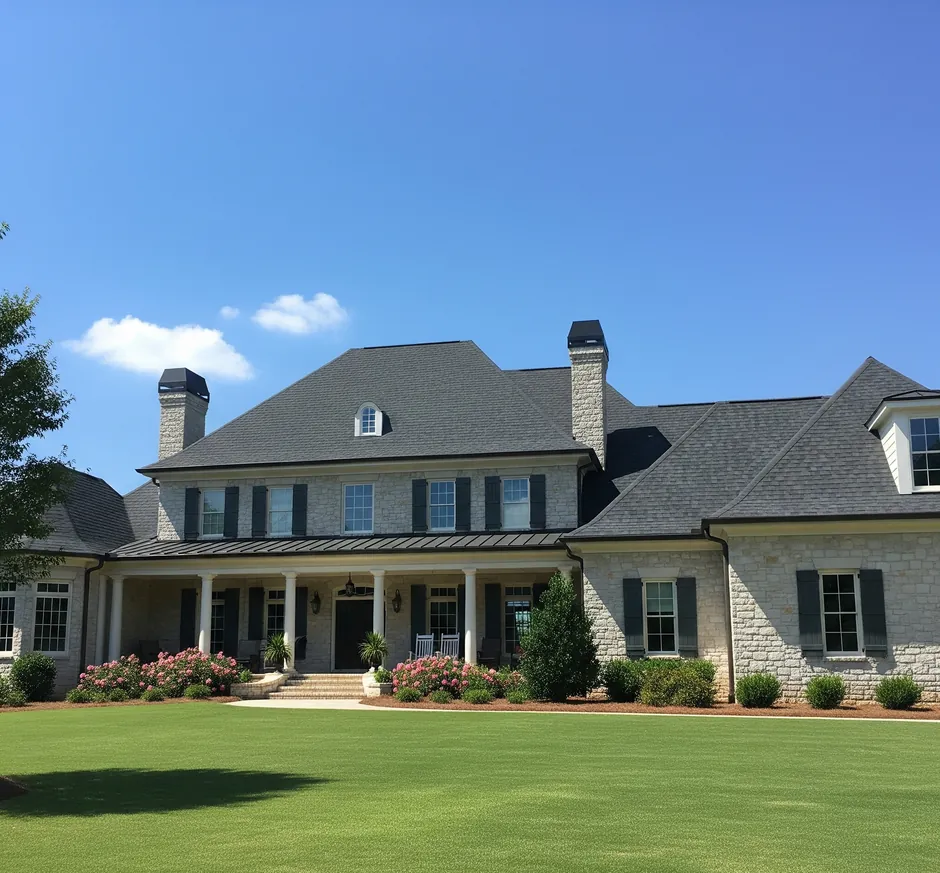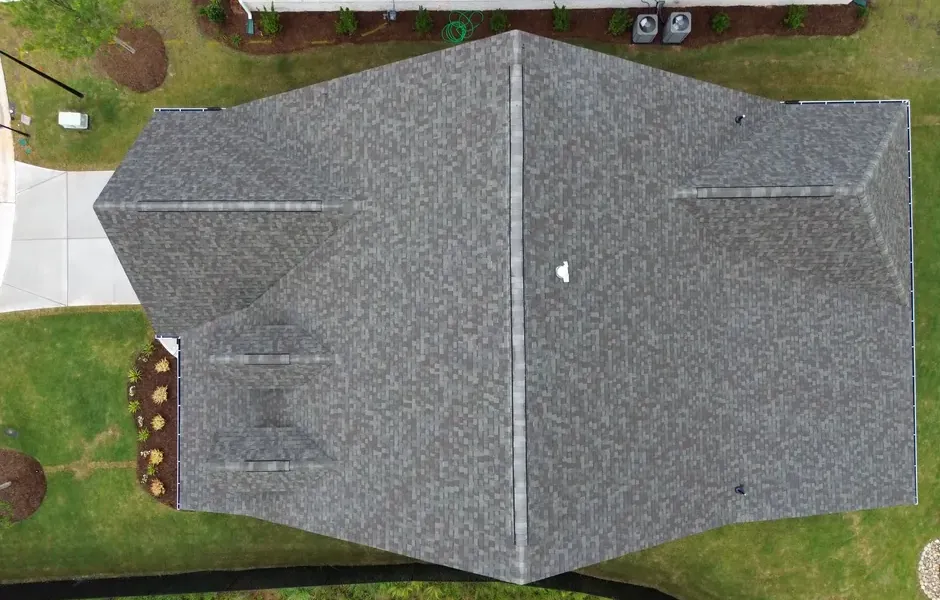
If you want the short answer for a Dunwoody home: GAF Timberline HDZ architectural shingles in a lighter, reflective color. They carry the highest wind rating GAF offers when installed to manufacturer specification, they resist the algae streaking that plagues shaded North Atlanta roofs, and they handle the freeze-thaw swings we get between July afternoons and January mornings. Most homes here run a 30-year laminated architectural shingle and replace it around year 18 to 22, sooner than the package name suggests, because our climate is hard on asphalt.
That last point matters. Georgia heat does not destroy a roof the way a single hailstorm does. It wears one down quietly. A roof in Dunwoody bakes under direct sun for months, soaks up humidity overnight, then dries out again the next morning. That cycle, repeated for years, cracks shingles, curls their edges, and loosens the asphalt bond. Choosing the right shingle up front buys you years on the back end.
This guide covers what holds up here, why architectural shingles beat three-tab, how color changes attic temperatures, and where premium options earn their cost. We install GAF and CertainTeed shingle systems, and the GAF pick here stands on the shingle’s own performance in Georgia heat and wind, not on any endorsement. When it is time for a new roof, we handle roof replacement in Dunwoody start to finish.
Why Georgia Heat Is Harder on Shingles Than Cold
A lot of homeowners assume snow and ice are what age a roof. In Dunwoody, heat and moisture do far more damage.
Asphalt shingles are petroleum products. When the sun pushes a dark roof surface past 150 degrees on a hot July day, the asphalt softens and the volatile oils inside start cooking off. Lose enough of those oils over enough summers and the shingle goes brittle. Then a cold snap hits, the material contracts, and you get cracking and granule loss. Granules are the sandy coating that shields the asphalt from UV, so once they wash into your gutters the shingle ages even faster. It is a downward spiral that our long, hot summers accelerate.
Humidity adds a second problem, made worse by Dunwoody’s tree canopy. DeKalb County sits in a humid subtropical zone with overnight dew points that stay high from May through September, and the mature oaks and pines that make neighborhoods like Dunwoody Club Forest and Vermack so pleasant also hold shade that slows drying. Moisture lingering on a north-facing or tree-shaded slope feeds algae, the blue-green organism behind those black streaks on so many older Dunwoody roofs. Algae does not eat through shingles, but it holds moisture against them and shortens their life while making the whole house look tired. The right shingle here has to fight UV, moisture, and biological growth all at once.
Architectural vs Three-Tab: Start Here
If you remember one thing, make it this. Skip three-tab shingles.
Three-tab shingles are the flat, single-layer product that dominated roofs through the 1990s. They are cheaper, lighter, and thinner, and that thinness is exactly the problem in our heat. A typical three-tab carries a 60 to 70 mph wind rating and a 25-year package that realistically gives you 15 to 18 years in Georgia. They curl and crack under sustained UV faster than anything else on the market.
Architectural shingles, also called laminated or dimensional shingles, are built from two or more fused layers. That extra mass helps in our climate. It absorbs the expansion and contraction of thermal cycling better, carries far higher wind ratings of commonly 110 to 130 mph, and looks better, with a dimensional shadow line that reads like wood shake from the street. That matters on the upscale homes around Dunwoody Village and Branches.
The cost difference is smaller than most people expect. On a typical 2,500 square foot Dunwoody home you might spend an extra few hundred to a thousand dollars to step up to architectural. Spread over the five to eight extra years you get, it is one of the easiest decisions in the project. Run real numbers for your roof on our roof cost calculator.
The Top Pick: GAF Timberline HDZ
For most Dunwoody homes, GAF Timberline HDZ is the shingle to beat. It is the best-selling architectural shingle in North America, and it earns its spot on roofs here.
The HDZ name refers to the LayerLock technology and wider nailing zone GAF built into the shingle. Installed to manufacturer specification, it qualifies for a wind warranty with no maximum wind speed limitation. That is unusual. Most shingle warranties cap out at a stated mph, but the HDZ, installed correctly, does not. In a region that catches the tail end of tropical systems pushing up from the Gulf, that performance is worth having.
Three features make it a strong fit for Georgia specifically:
- StainGuard Plus algae protection. This adds copper-lined granules that suppress the blue-green algae behind our black streaking. On the HDZ Plus version the algae warranty runs 25 years, which is the longest in the category. For a tree-shaded Dunwoody roof this is not a nice-to-have, it is the feature that keeps your roof from looking ten years old at year five.
- High wind performance. The wider nailing zone makes a correct install more forgiving and qualifies the roof for the no-limit wind coverage mentioned above.
- Cool-roof colors. Several Timberline colors meet reflectivity standards that lower attic temperatures, which we will get into below.
Put those strengths together and Timberline HDZ earns its place on this list on the merits of the roof itself: long algae protection, a no-limit wind warranty when installed correctly, and cool-roof color options. Every install we do is backed by our written workmanship warranty, and qualifying GAF systems carry manufacturer material warranties.
Color Matters More Than You Think
Here is a number that surprises people. On a hot Georgia afternoon, the attic under a dark charcoal roof can run 20 to 40 degrees hotter than the attic under a light, reflective one. That heat does not just make your upstairs uncomfortable. It pushes your air conditioner harder, drives up your summer power bill, and slowly cooks the shingles from below while the sun cooks them from above.
Reflective shingles, sold as cool-roof or solar-reflective colors, use coated granules that bounce more of the sun’s energy back into the sky instead of soaking it into your home. GAF’s Timberline line includes several. They are not bright white, which would look wrong on a traditional Dunwoody home, but come in weathered wood, slate, and lighter gray tones that fit the neighborhood while still cutting heat gain.
There is a tradeoff. Lighter roofs reject more heat, while darker ones hide streaking and read as more traditional on certain homes. For most houses here a medium reflective tone is the sweet spot. It sits well next to the brick and hardiplank common in Dunwoody North, keeps the attic cooler, and still resists staining thanks to the algae granules. If your home has a deep front slope taking full afternoon sun, lean lighter for the energy savings.
Color only works if your attic can move the heat it does absorb. Reflective shingles plus poor ventilation still leave you with a hot upstairs. The two go together, which is the next piece.
Ventilation: The Other Half of a Heat-Ready Roof
The best shingle in the world will fail early over a poorly ventilated attic. This is a common problem on Dunwoody homes, especially the mid-century ranches and split-levels built before modern ventilation was standard.
Here is the mechanism. A ventilated attic pulls cooler air in through soffit vents at the eaves and exhausts hot air out a ridge vent at the peak, carrying heat and moisture out instead of trapping it against the roof deck. Without it, summer attic temperatures climb past 130 or even 140 degrees, the trapped heat bakes the shingles from beneath, and the asphalt bond breaks down years early. Trapped humidity condenses on the deck, feeds mold, and rots plywood from the inside.
When you replace a roof in Georgia, the ventilation should be evaluated and corrected as part of the job, not treated as an afterthought. A ridge-and-soffit setup balanced to the attic’s square footage is the standard worth asking for. That, paired with reflective architectural shingles, is what keeps a Dunwoody attic and the roof above it from overheating.
When to Step Up to Premium Shingles
Timberline HDZ covers most homes well. Two situations justify spending more.
The first is hail and storm exposure. Dunwoody catches severe thunderstorms every spring and summer, and hail is a real risk in metro Atlanta. Impact-rated shingles carry a Class 4 rating, the highest level for impact resistance, meaning they passed a test where a steel ball is dropped to simulate hail strikes. They cost more, but many Georgia insurers offer a premium discount for a Class 4 roof, which can offset the difference over time. If your roof is exposed or you have filed a hail claim before, this upgrade earns its keep. After any rough storm, our free storm damage check tells you whether you have damage worth filing on.
The second is curb appeal on a higher-end home. Designer shingles, such as GAF’s Grand Sequoia or Camelot line, mimic natural slate or hand-split wood shake with much heavier shadow lines and a more textured profile. On a custom home in Branches or near Dunwoody Country Club, the upgraded look can be worth the premium, and these lines still carry the same algae protection and high wind ratings, so you pay for appearance, not weaker performance. What we steer homeowners away from here is real wood shake, which rots in our humidity, and clay tile, which is heavy enough that many homes need structural reinforcement to carry it. If you want something beyond asphalt entirely, metal roofing is the one alternative that genuinely suits our climate. Otherwise, architectural asphalt is the practical choice for the overwhelming majority of homes here.
Quick Comparison for Dunwoody Roofs
| Shingle Type | Wind Rating | Realistic Lifespan Here | Best For |
|---|---|---|---|
| Three-tab | 60-70 mph | 15-18 years | Tight budgets, rentals, sheds |
| Architectural (Timberline HDZ) | Up to no-limit when installed to spec | 18-25 years | Most Dunwoody homes |
| Impact-rated (Class 4) | High, plus hail resistance | 20-30 years | Storm-exposed roofs, insurance discounts |
| Designer/luxury | High | 25-30 years | Higher-end homes wanting a slate or shake look |
FAQ: Shingles for Georgia Heat
Q: What is the single best shingle for a Dunwoody home? A: For most homes, GAF Timberline HDZ architectural shingles in a reflective color. They qualify for GAF’s strongest wind coverage when installed to manufacturer specification, include long algae protection for our shaded roofs, and come in cool-roof tones that cut attic heat. It is the shingle we most often install on Dunwoody homes.
Q: How long do shingles last in Georgia heat? A: A 30-year architectural shingle realistically gives you about 18 to 25 years here, and a 25-year three-tab closer to 15 to 18. Our long hot summers and high humidity age asphalt faster than the package names suggest. Good attic ventilation and a lighter color both add years.
Q: Are impact-rated shingles worth it in metro Atlanta? A: Often, yes. Dunwoody sees real hail risk, and a Class 4 impact-rated roof can qualify for an insurance premium discount with many Georgia carriers, which helps offset the higher upfront cost. If your roof is exposed or you have had a hail claim before, it is usually worth it.
Q: Why does this site recommend GAF over other brands? A: Because the Timberline HDZ performs where it counts in this climate, not because of any endorsement. It offers long algae protection for our shaded, humid roofs, cool-roof colors that cut attic heat, and a no-limit wind warranty when installed correctly. We install it to manufacturer specification and back our labor with a written workmanship warranty. If a different shingle fits your home better, we will tell you.
Choosing for Your Specific Roof
The right shingle depends on your home’s sun exposure, tree cover, roof pitch, and budget, and no blog post can pin that down for your exact address. A 1960s ranch in Dunwoody Club Forest under heavy oak shade has different priorities than a newer two-story near Perimeter that takes full western sun. The shingle, color, and ventilation plan should be matched to the house.
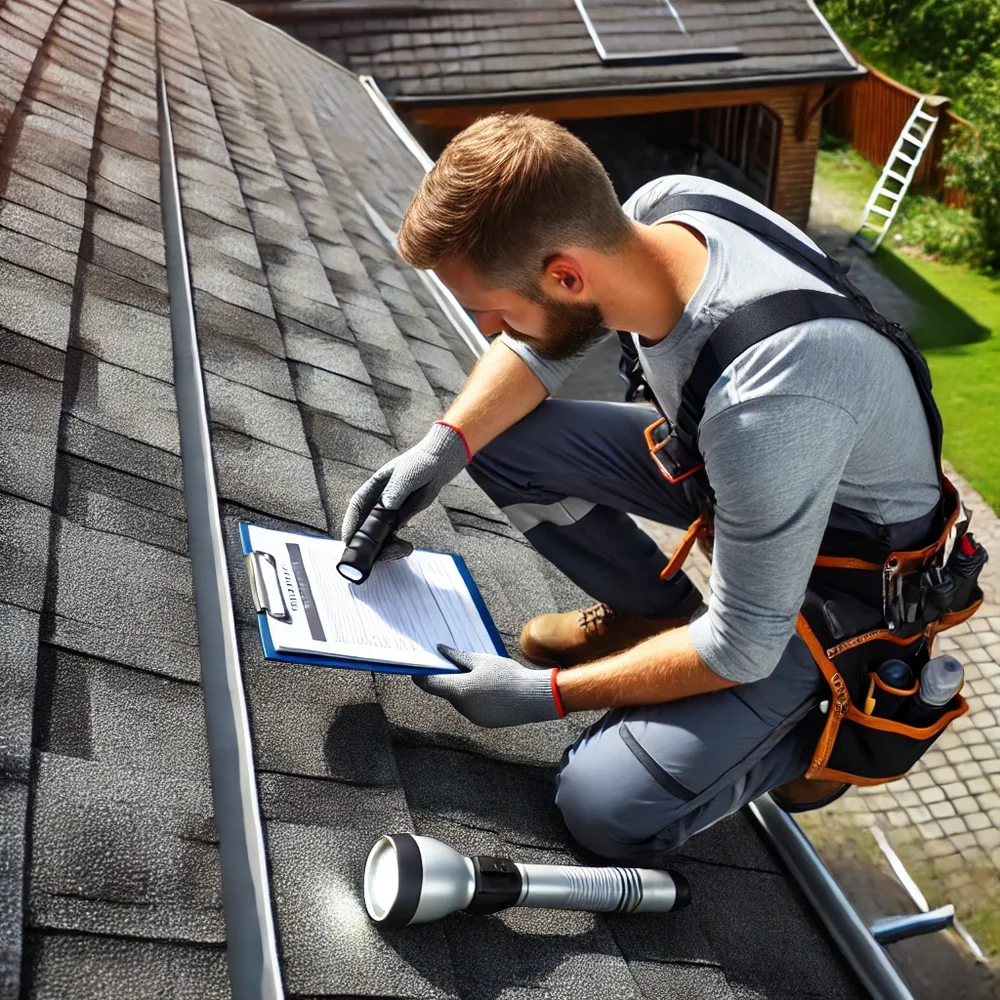
The most useful next step is a free inspection. Our team will assess your ventilation, check your sun and tree exposure, and recommend a specific Timberline color and grade for your situation, with a written estimate and no pressure. To ballpark the cost first, run your numbers through the roof cost calculator, then book the inspection to confirm.
Call (470) 777-7344 to schedule a free roof inspection with Best Dunwoody Roofer. We serve Dunwoody and North DeKalb homeowners, and there is no obligation to book work after the inspection.
Wondering what this means for your budget? Get an instant roof estimate for Dunwoody, priced from your home's actual roof size, or run a quick storm damage and insurance check.