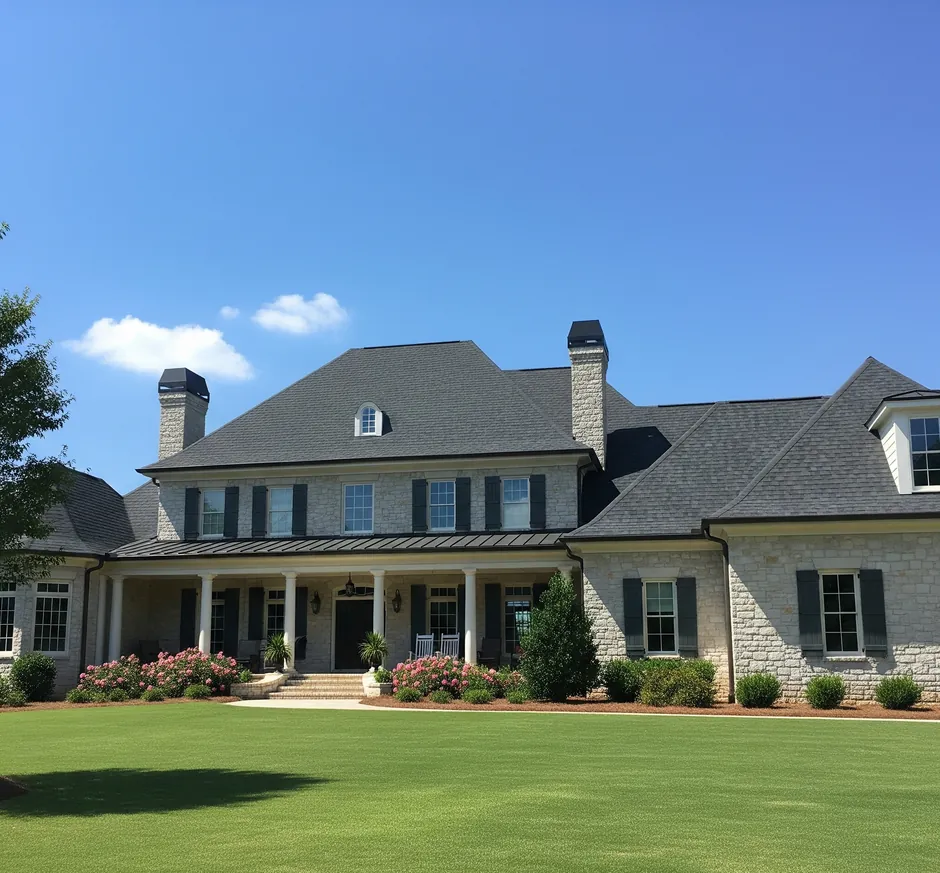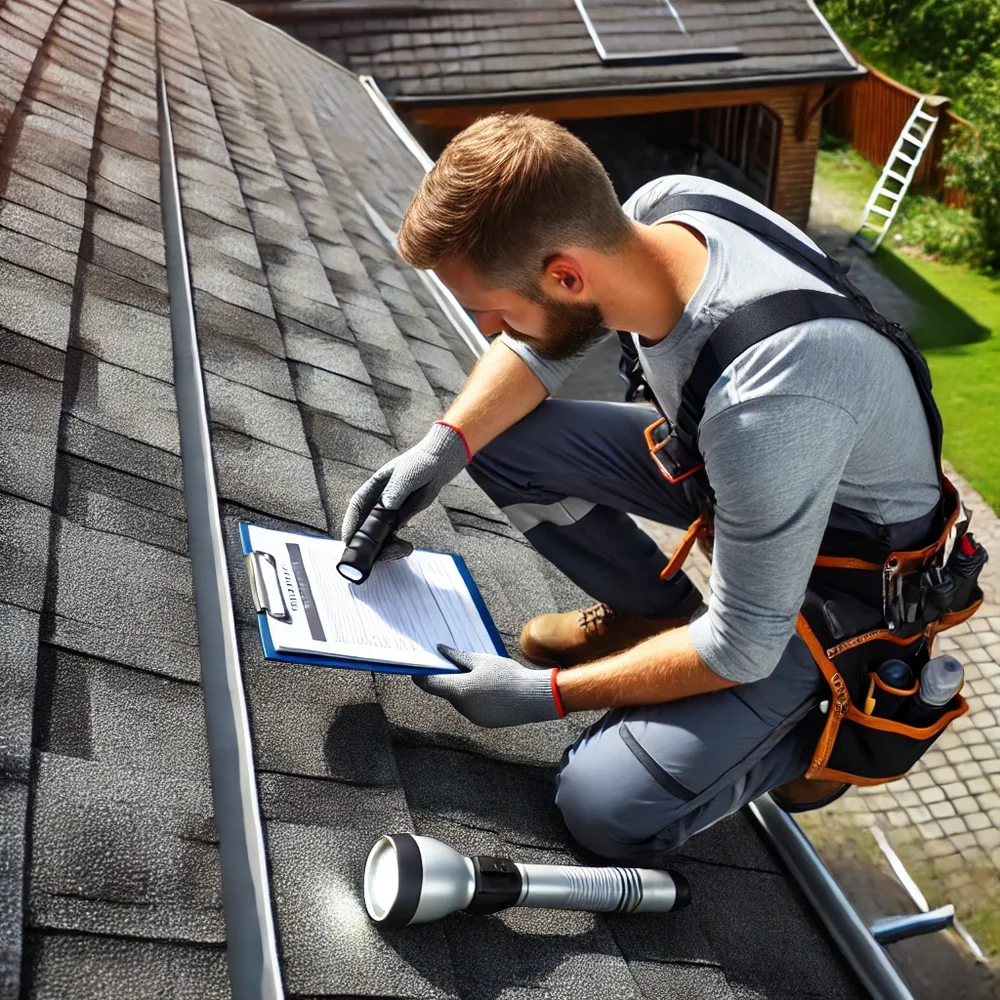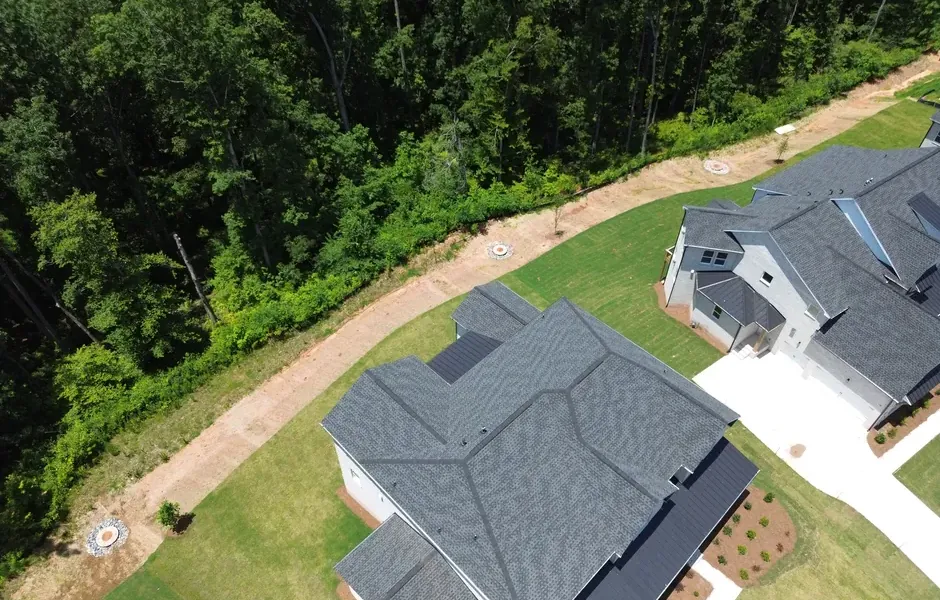
If you own or manage a commercial building in Dunwoody, the short version is this. For most flat and low-slope roofs around Perimeter Center and Dunwoody Village, a TPO membrane is the practical choice. It reflects heat, which cuts cooling costs through our long Georgia summers, it stands up to ponding water and UV better than older systems, and a quality install runs roughly 20 to 30 years. EPDM and modified bitumen still have their place, and the right call depends on your building, but TPO is where most commercial roofs here are landing.
Commercial roofing is a different animal from the asphalt shingles on a house. The roofs are flat or low-slope, the materials are single-ply membranes or built-up systems rather than shingles, and the failure modes differ. Water does not run off a flat roof the way it sheets off a steep one. It sits, finds seams, and works its way in. In a humid subtropical climate like DeKalb County’s, with heavy summer storms and intense UV, getting the flat-roof details right is what separates a roof that lasts decades from one that leaks in five years.
This guide covers the membrane options, the problems specific to flat roofs in our climate, what commercial work costs, and how the insurance side works after storm damage. We handle commercial and residential roofing across Dunwoody and North DeKalb.
Why Flat Roofs Behave Differently in Georgia
A flat commercial roof has almost no slope, so water crawls toward drains and scuppers and any low spot becomes a puddle. That single difference drives most of what makes commercial roofing its own discipline, and the climate compounds it three ways.
First, the heat. A dark, low-slope roof over an office or retail box in Perimeter Center absorbs an enormous solar load through our long cooling season, which bakes the membrane and drives up the air conditioning bill. Second, the storms. Our summer thunderstorms drop heavy rain in short bursts that overwhelm undersized or clogged drains and leave standing water behind. Third, the humidity and thermal cycling. Membranes expand in the heat and contract overnight, and over years that movement stresses seams and flashings until one lets go.
The buildings vary widely here. Perimeter Center has mid-rise and low-rise offices with large roof areas and rooftop HVAC units. Dunwoody Village and the corridors along Chamblee Dunwoody Road mix retail strips, restaurants, and mixed-use space. Each has its own drainage layout, penetration count, and access. A commercial roof assessment starts with the specific building, not a generic spec sheet.
TPO: The Workhorse for Dunwoody Commercial Roofs
TPO, short for thermoplastic polyolefin, is a single-ply membrane that has become the default for commercial flat roofs across the Southeast, and for good reason in our climate.
The biggest advantage is the white reflective surface. TPO bounces a large share of the sun’s energy back into the sky instead of letting it heat the building. On a Perimeter office building with a big roof footprint, that reflectivity means lower summer cooling costs, a serious line item when you are conditioning thousands of square feet through a Georgia summer. It is the same cool-roof principle that helps residential roofs, scaled up.
TPO also resists UV, ozone, and chemical exposure well, and the seams are hot-air welded rather than glued. A welded seam fuses the two sheets into what is effectively one continuous membrane, far stronger and more watertight than a taped seam that can peel over time. That is exactly what you want on a roof where water sits and probes for weaknesses.
A quality TPO install typically lasts 20 to 30 years depending on membrane thickness and maintenance. Thicker membranes, in the 60 to 80 mil range, hold up better to foot traffic from service crews and to hail. For most Dunwoody commercial buildings, TPO hits the best balance of upfront cost, energy savings, and lifespan.
EPDM and Modified Bitumen: When They Make Sense
TPO is not the only option, and a good contractor will not push one system onto every building.
EPDM, a synthetic rubber membrane often called rubber roofing, is proven and durable. It is usually black, so it absorbs heat rather than reflecting it and works against you on cooling costs here unless you add a reflective coating. It does well on longevity, simplicity, and temperature swings, especially on roofs with fewer penetrations. For a building where reflectivity is not the priority, or where the existing roof is already EPDM and a like-for-like swap makes sense, it remains a solid choice.
Modified bitumen is a modernized version of the old built-up tar-and-gravel roof, applied in multiple plies that are torched, heat-welded, or self-adhered. The multi-layer build makes it tough and puncture-resistant, which suits roofs with heavy foot traffic or lots of equipment, and it can take a reflective cap sheet for the heat. It is a reasonable pick for smaller buildings and complex details where a multi-ply system adds redundancy.
The honest answer on which system fits comes from an inspection, not a brochure. Roof size, slope, drainage, penetration count, energy goals, and budget all factor in. Our team will walk the roof and recommend the system that fits, which sometimes is not the most expensive one.
The Ponding Problem and How to Fix It
If one issue defines flat-roof trouble in Dunwoody, it is ponding water. Standing water that does not drain within a day or two after a storm is the single biggest threat to a commercial roof here. It accelerates membrane breakdown, adds dead weight that stresses the structure, grows algae and vegetation that hold even more moisture, and turns any small seam weakness into an active leak. After one of our heavy summer downpours, a roof with poor drainage can hold inches of water over a low spot for days, and that is exactly where failures start.
The causes are usually fixable. Drains and scuppers clog with leaves from Dunwoody’s heavy tree canopy and rooftop debris, so they back up during the storms that need them most. Roofs settle over time and develop low spots. Sometimes the original roof was built with too little slope toward the drains. Fixes range from a regular drain-cleaning schedule, to adding drains or scuppers, to installing tapered insulation that rebuilds positive slope so water moves where it should.
This is why commercial roofs need scheduled maintenance in a way steep residential roofs do not. A flat roof cleared twice a year, especially heading into spring storm season, lasts far longer than one ignored until it leaks into the suite below. Catching a clogged drain or a lifting seam early is the difference between a small repair and an interior water-damage claim.
What Commercial Roofing Costs in Dunwoody
Commercial roofing is priced by the square foot, and the range is wide because buildings vary so much. A simple retail-strip roof and a multi-penetration office with dozens of HVAC curbs are very different jobs at the same square footage.
The factors that move the price are membrane type and thickness, roof size and access, the number of penetrations and rooftop units to flash around, whether the old roof is torn off or recovered over, and how much insulation or tapered work is needed to fix slope and meet energy code. TPO and EPDM tend to land in a similar mid-range per square foot, with modified bitumen comparable, while a full tear-off with new tapered insulation costs more than a recover over a sound deck.
Two long-run factors are easy to underweight. A reflective TPO roof lowers cooling costs every summer, which compounds over a 25-year life on a large roof. And a roof on a maintenance plan reaches the top of its lifespan, while a neglected one fails years early and forces an unplanned capital expense. The cheapest roof to own is rarely the cheapest to install. For a rough early number, start with our roof cost calculator, then get a commercial assessment for a building-specific figure.
Storm Damage and Commercial Insurance Claims
Dunwoody’s spring and summer storms hit commercial roofs as hard as residential ones, and damage on a flat roof is tough to spot from the ground. Punctures, membrane bruising, lifted flashings, and displaced ballast often hide until they leak, so damage from a storm months ago can surface as an interior leak today.
Commercial claims have higher stakes and more moving parts than a homeowner claim. There is often more coverage at issue, business-interruption considerations if a leak disrupts operations, and an adjuster who will scrutinize whether the damage is storm-related or long-term wear. Documentation matters more here than almost anywhere.
This is where a contractor who handles insurance claims pays off. We specialize in insurance-claim work, document storm damage thoroughly, and work directly with the adjuster so legitimate damage is captured and the scope reflects what the roof needs. We walk owners through the entire claim and push the carrier for the right outcome rather than a patch that leaves the building exposed. After any significant storm, our free storm damage check is the fastest way to learn whether your roof took a hit worth filing on, and our storm damage repair team can move quickly once you know.
Repair, Recover, or Replace
When a commercial roof has problems, you generally have three paths, and choosing well saves money.
- Repair when the membrane is sound and the trouble is localized, such as a failed seam, a damaged flashing, or a single ponding area. There is no reason to replace a 15-year roof over one bad detail.
- Recover (a new membrane over the existing one) when the roof is at end of life but the deck and insulation underneath are dry and sound. It skips a full tear-off, but only works once, and only with no trapped moisture below, since covering wet insulation seals the problem in. An inspection, sometimes with moisture scanning, confirms it is safe.
- Replace when the roof has widespread saturation, structural concerns, or multiple failing systems. It costs the most upfront but resets the clock with a clean, properly sloped, fully warrantied system.
The right call depends entirely on the roof’s actual condition, which is what an inspection is for.
FAQ: Commercial and Flat Roofing in Dunwoody
Q: What is the best flat roof material for a commercial building in Dunwoody? A: For most buildings, TPO. Its reflective white surface lowers cooling costs through our long Georgia summers, its hot-air-welded seams resist the ponding and storm exposure flat roofs face here, and a quality install lasts 20 to 30 years. EPDM and modified bitumen fit certain buildings, but TPO is the most common choice in metro Atlanta.
Q: How long does a commercial flat roof last in Georgia? A: A well-installed TPO or EPDM roof generally lasts 20 to 30 years, and modified bitumen is in a similar range. Lifespan depends heavily on membrane thickness, drainage, and maintenance. Our heat and heavy summer storms shorten the life of a neglected roof, so a twice-yearly maintenance plan matters more here than in milder climates.
Q: Why does my flat roof keep holding water after it rains? A: That is ponding, and it usually comes from clogged drains, low spots where the roof has settled, or too little original slope. Standing water that lingers more than a day or two breaks down the membrane and leads to leaks. Fixes include a regular drain-cleaning schedule, adding drainage points, or installing tapered insulation to rebuild positive slope.
Q: Do you handle commercial insurance claims for storm damage? A: Yes. We specialize in insurance-claim work and handle both residential and commercial properties. We document storm damage on the roof, work directly with your adjuster, and push for a scope that reflects what the roof actually needs, walking you through the full claim process.
Get a Commercial Roof Assessment
Every commercial building in Dunwoody is different, and the right membrane and approach follow from your roof’s specifics. A blog post cannot tell you which system your building needs, but a roof assessment can.
Best Dunwoody Roofer offers free roof inspections for commercial and residential properties. We will walk your roof, evaluate the drainage and the existing system, check for storm damage and ponding, and lay out your repair, recover, or replacement options with a written estimate and no pressure. For a rough budget first, the roof cost calculator gives you a starting point, and after any storm the free storm damage check confirms whether you have damage worth a claim.
Call (470) 777-7344 to schedule a commercial roof assessment with Best Dunwoody Roofer. We serve commercial and residential properties across Dunwoody and North DeKalb.
Wondering what this means for your budget? Get an instant roof estimate for Dunwoody, priced from your home's actual roof size, or run a quick storm damage and insurance check.